Overview
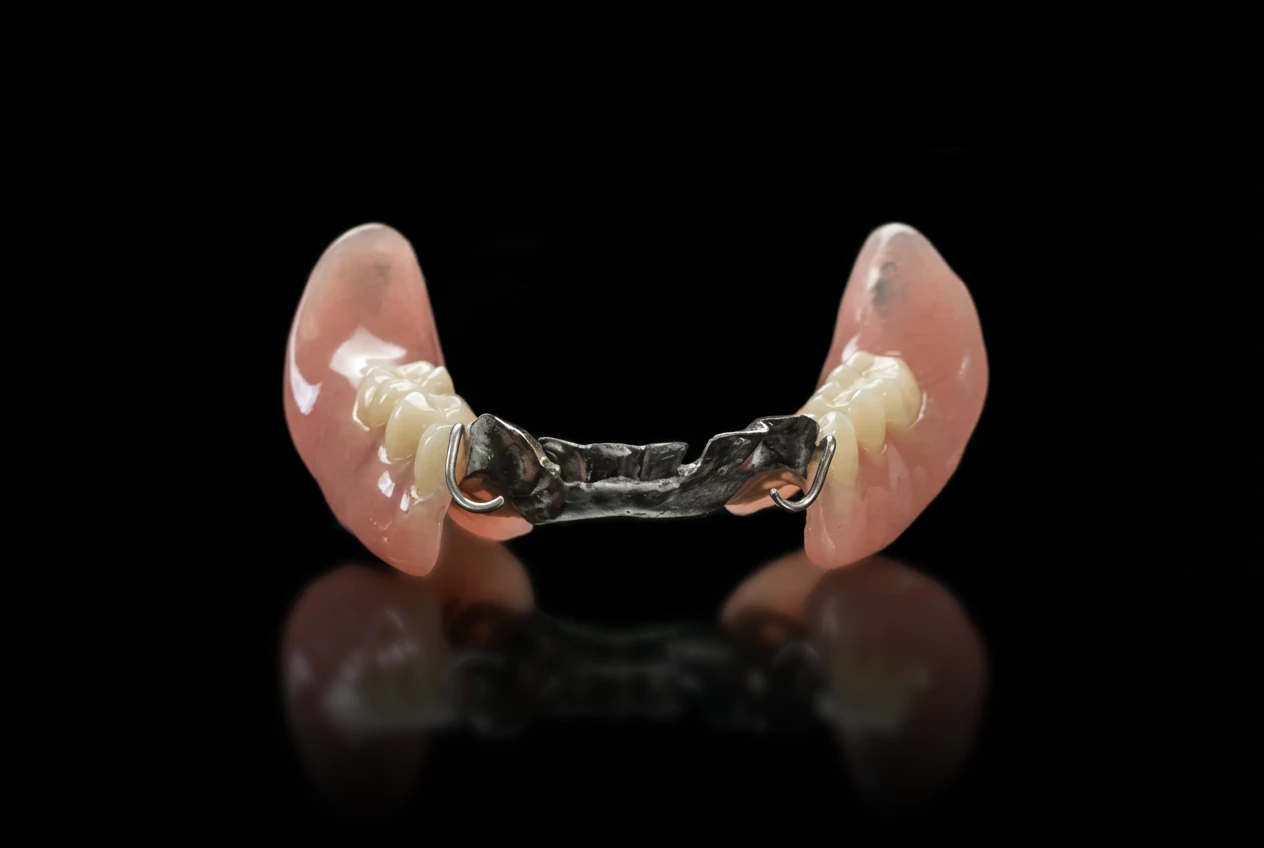
When patients cannot be separated from their partial dentures but need crown adaptation, dentists can use a chairside indexing technique with heavy-bodied PVS or polyether to capture the clasp and rest relationship without sending the actual partial to the lab.
How It’s Done
The procedure uses Ramitec or similar heavy-bodied, highly viscous materials and involves these steps:
- Pre-polish the underside of clasps and rests to a mirror finish, removing all plaque and debris.
- Provide a pre-operative study case.
- Prepare the tooth, pack cord, and take an impression.
- Mix a small amount of Ramitec (approximately the size of chewing gum) and place it over the preparation, covering the entire prep, margins, and just touching proximal teeth.
- Seat the partial’s clasp and rest onto the Ramitec, capturing a clear impression of cleaned and polished contact surfaces.
- Avoid burying clasps, incorporating creases, streaks, voids, or bubbles; allow complete material setting before removal.
This index, along with the pre-op cast, enables the technician to make an acrylic reproduction of the clasps and rests in relation to the prep and proximal teeth.